
Receiving paper checks was once common. But at one point in time, employees would receive their checks and go to the bank to deposit the check. Then, they had to wait days for the bank to process the check before they could access their money. Because of this, businesses and employees are looking for faster, more dependable, easier ways to manage payroll. Hence, why today direct deposit works and has become the norm for both employees and employers.
As an employer or employee, it is important to have a good understanding of how direct deposit works. It makes payroll easier than ever before, reducing administrative work and allowing you to make sure your employee receives paycheck and other payments on time. Instead of sending your employee’s physical checks, you send the money electronically to their bank.
If your business is in an expanding phase, direct deposit provides companies with more efficient processes. Having direct deposit creates a foundation of trust with employees and also provides you with a more continuous payroll process.
What is Direct Deposit?

Direct deposit is a way to transfer money electronically between a person’s and an employer’s bank accounts. Rather than, using cash or debit cards for payroll. Even though many people use direct deposit to pay their employees, they can also use the service for making payments to vendors or for reimbursing employees for certain expenses.
Knowing how direct deposit works helps businesses streamline payroll and reduce the delays associated with manually processing payroll. As soon as the payment is initiated through a bank account, the money is safely transferred to the recipient’s bank account through a secure electronic link.
Furthermore, direct deposit eliminates the need to print out paper checks, sign them, and deliver them to employees physically. This reduces the number of checks that can be lost, as well as the possibility of checks being stolen or delayed in the mail.
How Does Direct Deposit Work?
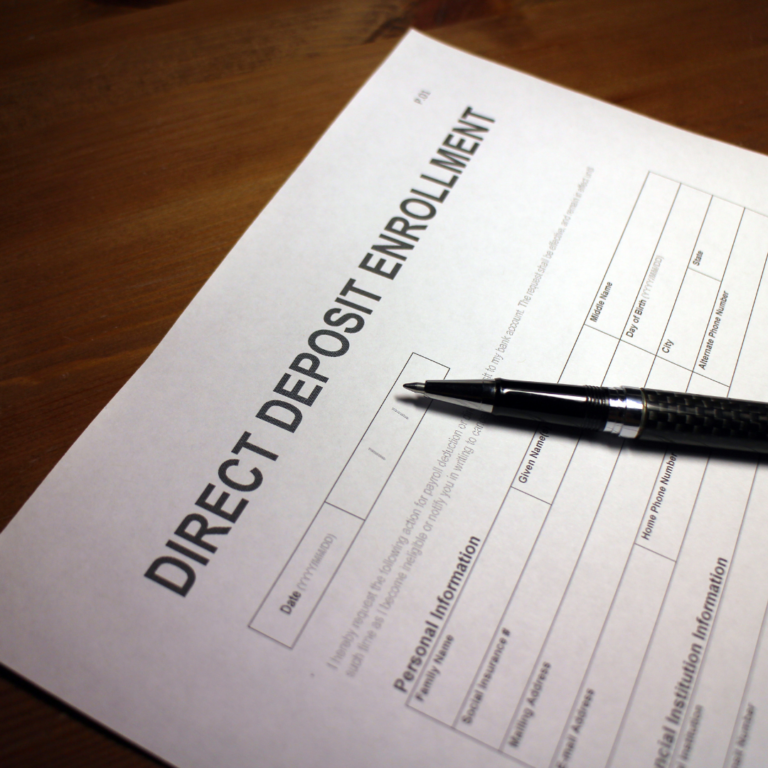
When setup correctly, direct deposits from employers quickly and easily deposit funds into an employee’s bank account. To do this, an employer will collect an employee’s bank routing and account numbers for direct deposit using a form from their payroll software. They will then enter that information into the employer’s internal payroll system to enable future paychecks to be directly deposited into the employee’s designated bank account.
1. Payroll is Processed
The employer determines the gross wages that are due to each employee as well as any taxes and deductions or amounts to be paid to each employee after all of these amounts have been calculated. An approved payroll will also have a payroll payment file created to move to a financial institution.
2. Funds Are Sent Electronically
The payroll payment file will be submitted via the ACH network to transfer funds. This process moves the dollar amounts between the financial institutions where payroll is sent and received.
3. Deposit Reaches the Employee Account
The employee receives his or her payment in the form of a direct deposit from the employer on payday into the employee’s checking/savings account. For many employees, banking institutions will allow for immediate access or early release of the payment amount based upon their policies.
4. Records Are Updated Automatically
Digital records of payroll payments allow employers to track their payments, keep an accurate history of payroll records, and to remain organized for accounting purposes.
After businesses have been educated about how direct deposit works, most conclude direct deposit saves a considerable amount of time. As well as, reduces the potential for errors as compared to the use of paper-based methods.
Why Direct Deposit is Beneficial
Direct deposit creates an easier and more reliable payroll process for both businesses and employees. It also provides providing businesses with fewer administrative burdens.
Employers using direct deposit will save companies time when it comes to printing checks, stuffing envelopes and manually handing them out. It also helps reduce expenses on printing supplies and postage, as well as costs associated with having to process checks.
As for employees, the main benefit of using direct deposit is the convenience it provides. With direct deposit, employees know when to expect their pay and do not need to go to their bank. There will never be a delay in getting their paycheck due to holidays, bad weather, or lost checks.
In addition to convenience, employees can expect improved security, faster access to their funds, and a more professional payroll experience. All of which helps develop trust between a company and its employees.
Common Challenges with Direct Deposit
While direct deposit is very efficient for businesses, there are also potential problems that can come from not properly managing the processes involved.
- Incorrect bank account information entered when setting up a direct deposit.
- Missed payroll deadlines that cause delays in processing.
- Limited visibility into payroll reporting.
- Using outdated systems that require manual intervention.
- Limited assistance when payment problems arise.
The above challenges can be avoided by using a reputable provider and ensuring employees’ records are accurate. Understanding how direct deposit works and behaves will help avoid common mistakes that could occur before they happen.
How Direct Deposit Improves Business Operations
The payroll function is a critical operation within an organization’s overall operation. If payroll is delivered on-time and accurately, it makes running the rest of the organization much easier.
Companies that utilize direct deposit, as opposed to paper checks, usually have better internal efficiencies because payroll becomes more reliable and automated. So, finance is able to spend less time on the repetitive processing of payroll and more time on strategic growth and planning initiatives.
Additionally, direct deposits support remote employees and multi-location organizations due to the employees receiving their pay consistently no matter where they are located. This is extremely important for today’s diverse workforce.
How Gulf Management Systems Can Help with Direct Deposit
Having the right partner is essential when implementing a good payroll system. GMS provides an array of options for payment solutions to allow you to simplify payroll and make your employee payments easier.
Our direct deposit allows you to provide your employees with faster and more secure payment methods by eliminating paper checks. As a result, your business will be able to provide immediate access to funds while having better visibility into your payroll process.
In addition, GMS offers a wide variety of payment and business solutions to help you grow your business.
- ACH payment processing for recurring payments
- Credit card processing and point of sale (POS) systems
- Mobile payment tools for flexible operations
- Reporting tools that will give you better payment visibility
- A virtual terminal to manage all of your electronic payments
- GMS eCheck that is compatible with WooCommerce
We provide a combination of reliable payroll services and enhanced payment technology, which will provide smoother and more professional payroll processing for your business.